Monday, November 15, 2010

Old Men and the Sea


It’s been eight weeks since my wife Linda died after a long illness. We were married twenty years and barely spent more than a few days apart. Our love was—and still is— as vast as the sky and deep as the ocean. Although I’m doing well and stepping out into my new life, every so often I feel overwhelmed and a little sorry for myself. Nothing helps like exercise.

I decide to join Tom Sewell and his friends for a swim at Baldwin Beach on Maui, a few miles from where I live. Every day of the week, Tom and a few others swim from the cove down to what is known as Baby Beach, a distance of about a mile. I’ve swum with them a few times before, sure that I’d have a heart attack, drown, be swept out to sea, or get smashed on a reef, (all of which nearly happened), but somehow I survived, and can’t wait to do it again.

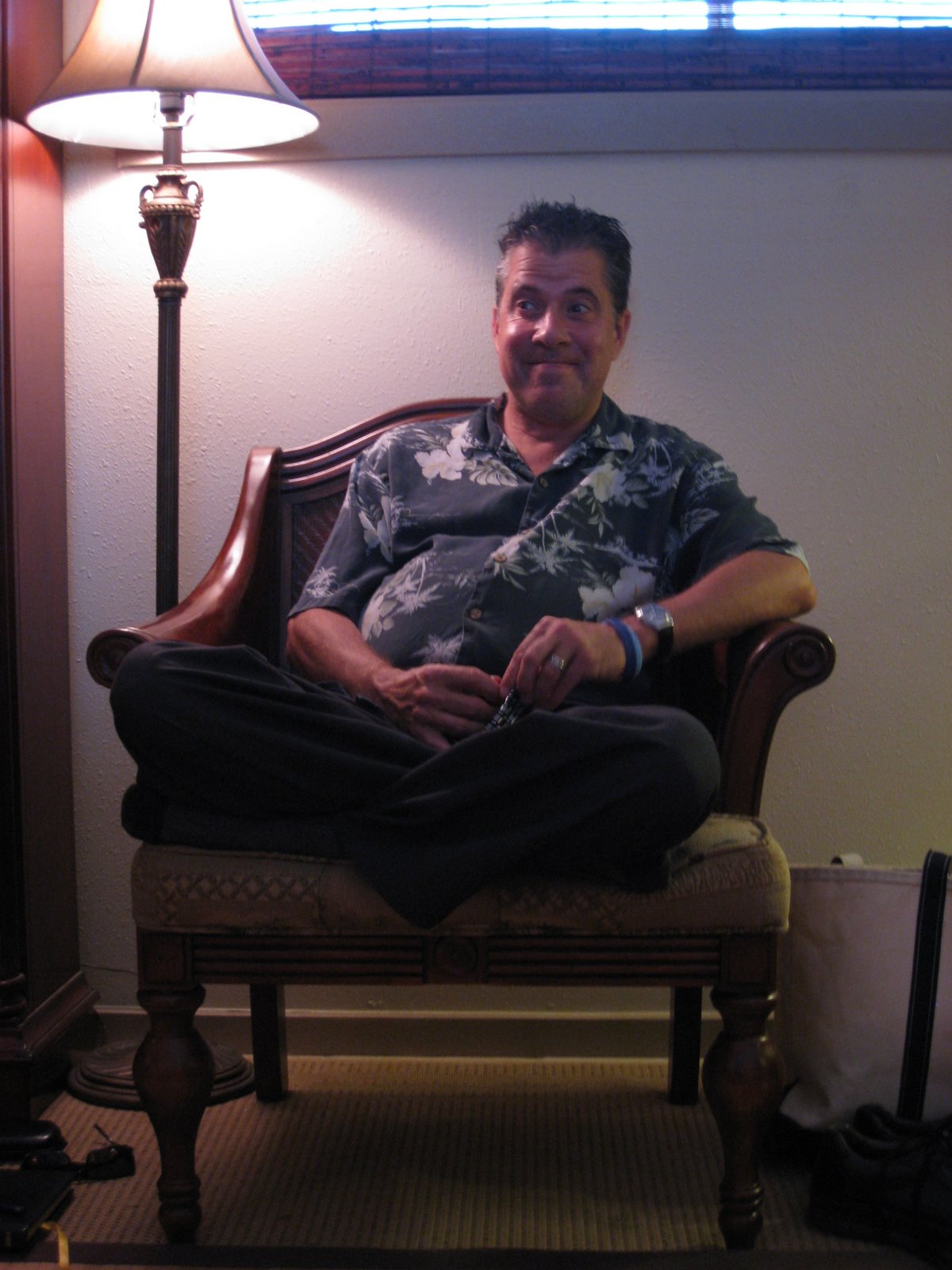
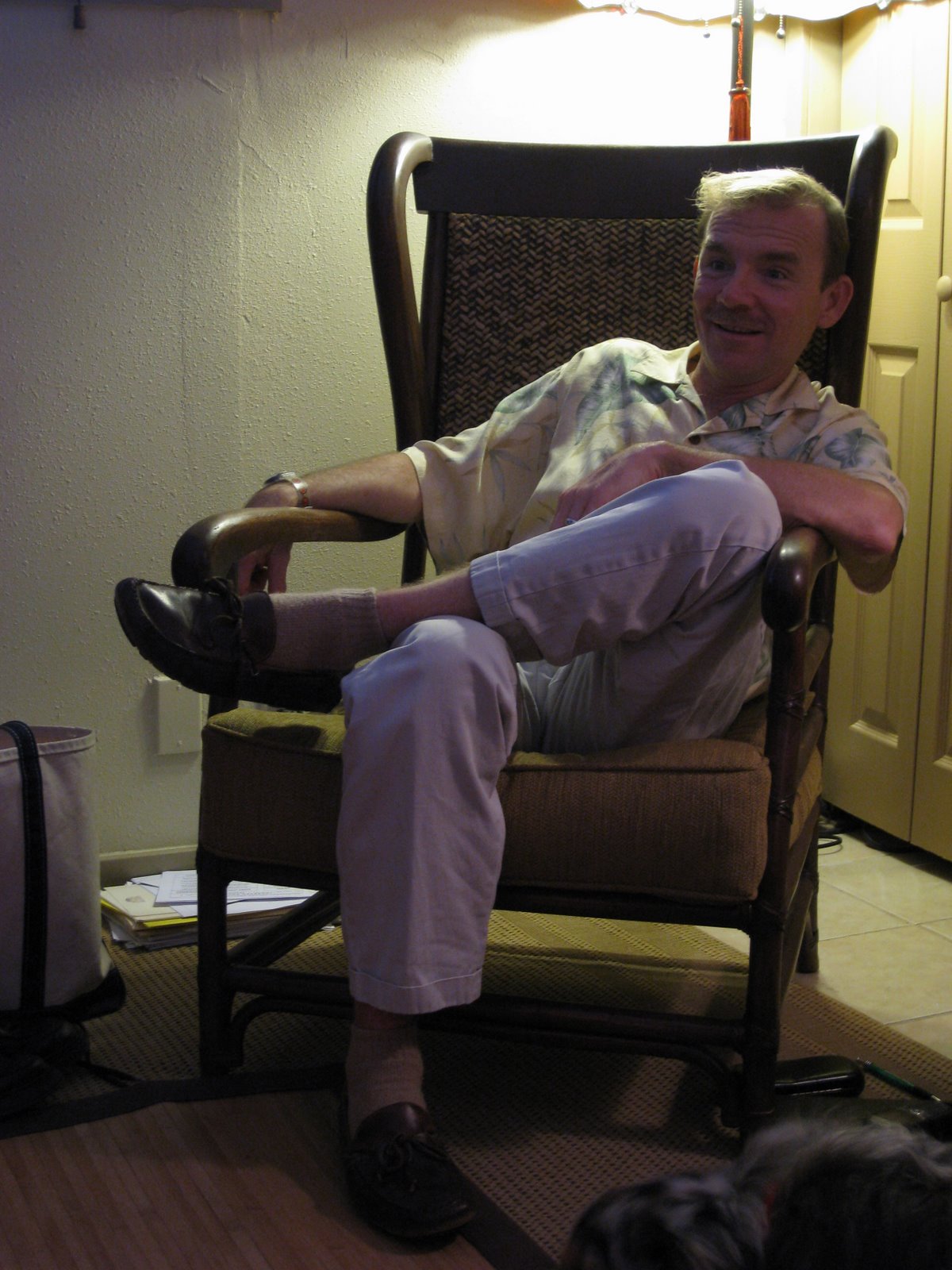
Tom, a celebrated artist and photographer, is usually joined by Skeeter Tichnor, a stunningly beautiful wold class Anusara yoga teacher, and Barry Sultanoff, a psychiatrist and author. A fourth person who shows up for the daily swim is Max. Max only has one arm.

Tom filled me in on Max’s story a few weeks ago. Swiss born Max de Rham is a renowned geophysicist and treasure hunter. In 1985 he and his partner Mike Hatcher found the famous Nanking Cargo, hundreds of feet beneath the ocean in the South China Sea. It sold at Christies for over ten million pounds. In 2008, while cruising the Mediterranean on his catamaran the Kanaloa, Max was enjoying a swim when a twin-engine powerboat came roaring by and accidentally ran over him. It severed his right arm, leaving propeller marks down his back, and damaging his brain. After the accident, Max fell into a deep depression. The healing power of the ocean, along with the love of family and friends, rekindled his joy for living.

“I’m glad you could join us,” Tom says, when I meet up with him and Max at the cove. “Today it’s just the three of us. Peter, this is Max.” I reach out to shake Max’s hand, remembering at the last moment that he has no right arm. He gives me a big smile and reaches out his other hand. Together we “suit up,” getting our gear ready for the swim. Tom, who is tall, thin, and always has a twinkle in his eye, wears a full wetsuit, diver’s cap, and mask; Max and I wear board shirts to protect us from the sun. Max is 6'3" and solidly built, with a weather-worn face from years on the sea. Next to them, with my slight build, freckles and beard, I look like the runt of the litter. Tom picks three leaves off a nearby hao bush to appease the spirits of the ocean, giving one to Max, one to me, and keeping one for himself, which he tucks into his headband.

Before entering the water, we stand side by side on the beach and offer up a prayer. We bow to the ocean, shouting out ahh-hoo together. We then raise our fins over our heads and cry, ahh-hooahh-hoo! We all have big smiles on our faces as we bow to the other three directions: ahh-hoo, ahh-hoo, ahh-hoo! Then, with a rousing cheer to Kanaloa, the Hawaiian God of the Sea, we head down to the water.

Here we are, about to do a one mile swim in rough, open water, which has recently been whipped up by a winter storm. The Tradewinds are still blowing at over 20 mph. Tom and I help Max get his fins on and guide him backwards into the water. We then head out beyond the protection of the cove into the open sea, carried up and down like bobbing corks. I love the wildness of it all and feel totally at home. It’s a leisurely cruise, rather than a race to the finish line. Max constantly gets off course because of his one arm. I turn to look for him, and to my concern, see that he’s heading out towards the horizon. He corrects course and heads back towards us. “You’ll have to get a GPS!” Tom shouts out over the wind and waves. All three of us laugh merrily.

We’re swimming parallel to the beach, being gently helped along by the current. I push back my mask so I can see more clearly. I can make out people walking along the beach about two hundred yards away. In the distance I can make out the towering West Maui mountains and the island of Molokai. What a majestic sight. I can taste the salt water in my mouth and feel the wind on my face. How amazing, I think, the air I’m breathing has blown across thousand miles of ocean. It’s so fresh and sweet! A big wave crests, and saltwater splashes over me with a big roar.

Suddenly I realize Tom and Max are fifty yards ahead. I put my mask back on and swim towards them, looking down into the emerald green depths of the ocean below. The water sparkles and glistens in silver bubbles as my arms rhythmically stroke through the water. My breath makes a hollow-sounding hoo-hah, hoo-hah, as I breathe in and out through the snorkel; the water gurgles as it flows by my ears. I feel as if I’m in another world, floating free, rocked in the arms of mother nature. Where are my problems now? This is pure joy.


Thirty minutes later we approach the end of our swim. I can see the waves crashing on shore. We’re aiming for a narrow channel that will take us to safety behind a reef. If we overshoot, we’ll be smashed up on the reef. It’s difficult to see where the channel is, as waves throw us up and down, breaking over our heads.

I follow Tom towards the shore. He finds the channel, which has a powerful rip current flowing out of it. It’s almost impossible to swim against the fierce current. Even Tom can’t make it, and heads towards shore. It’s my turn, and I head in, watching the surf crashing on the beach, trying to find the opening. On my left I can see the dark shapes of rocks under water; on my right the waves are crashing on the reef. The water is churned up into a froth of light turquoise, vivid blue and foamy white as the water rushes out from the channel. The current and the ebb of the waves keeps pushing me back out. I swim towards the shore, pushing hard with my flippers, but then get pulled out by the next wave receding. Finally I find purchase on the rock-strewn bottom and struggle to get my fins off and out of the water, panting and gasping for air from the effort.

Behind me, Max is struggling to come ashore. The surf tosses him around. Because he only has one good arm, it’s hard for him to remove his fins and stay afloat. I go back in the water and help him get them off. Tom comes in too. We're waist deep in water when I hear Tom say, "Oh no!" I turn and see a huge set of waves rolling in. We duck under the first wave, but the second one throws us head over heels in towards the shore. Laughing hysterically, Tom and I grab Max by the arm and guide him out of the water.

“You did it Max!” Tom cries out as we come onshore. There are smiles and claps on the back. Three guys in their seventies out having some fun! 


Max waves goodbye with his good arm as he walks back to his house near the beach; Tom and I start our walk back along the sand to where we started.

All of a sudden, my problems seem very small.

Tuesday, October 26, 2010

A Visit from the Other Side


Dragonflies were Linda’s totem animal. They would often fly up to her and hover in front of her, or land on her hand and remain still while she spoke softly to them. Linda could sit by the pond for hours watching a new dragonfly hatch on a water lily. Dragonflies, those ancient creatures of the wind, were a symbol of love and freedom for her.

Today I was walking across the living room when I noticed something on the floor. To my surprise, I saw that it was a large dragonfly and it was injured. Its abdomen (the elongated part of its body) had been crushed and it couldn’t fly. As I gently picked it up, I noticed that it was lying just a few feet away from the exact point where Linda left her body. To my shock, I realized that it was six weeks ago today that Linda died.


I carried it out to the pond and placed it in a spot where I hoped it would heal and fly off. As I looked at it more closely, I was stunning by its beauty. It had two sets of transparent wings at least five inches across. The central part of its thorax was a rich emerald green, tapering off to a luminescent metallic blue tip. It moved about on its three pairs of legs, but was clearly too weak to fly. I prayed for its healing and left it in its natural setting.

When I checked on it a few hours later, it was dead. It was 2:00 PM, almost exactly the time of Linda’s death.


Of course, it could have been a random dragonfly that just happened to fly into the living room and land on the floor injured, but what are the chances of that? I feel that it was Linda letting me know that she is watching out over me, and that she is always and ever present for me.

I’m sure she’s happy to know how well I’m doing, even though I miss her terribly. On Saturday mornings I’ve been swimming a mile down Baldwin Beach with my swimming buddies. Last Sunday I did stand-up paddling for the first time and loved it. I joined Upcountry Fitness, a local gym in Haiku, where I’ve been doing yoga and Qi Gong. I also spend time with friends, go for hikes with the boys, and write every day. Most importantly, I make sure to have quiet time alone every day. It feels like my life is rich and full.

Every so often I get hit by something out of the blue, like finding a blond hair stuck to a clothespin when I’m hanging out the laundry. Yesterday I was balancing the checkbook and came across a check Linda had written on the last day she was alive. Today I found a birthday card that I had written on August 3: To my dearest love, A celebration of another year together and the magical angels that brought you into my life. I hold the vision of us sitting on the lanai, both in indescribable peace. What joy and love you have brought into my life. I’ll love you forever . . 
.
I let the feelings move through, and then I remember that Linda is free of her form, just like the dragonfly, soaring through the air, sending me love and joy from the formless.
  

Monday, October 11, 2010

Linda's Gift


They say that I am dying but I am not going away. Where could I go? I am here.
                                                                                                            Ramana Maharshi
It’s a beautiful Maui day. I’m near the end of a long hike in Makawao Forest with my two dogs, enjoying the sweet smell of the eucalyptus trees, the soft air, and the distant view of the ocean. I’m relaxed and at peace. Suddenly I stop dead in my tracks, hit by a stunning realization. A few hours earlier I was weeping uncontrollably as I wrote about the death of my wife Linda. What’s the difference between then and now?

As I wrote about the trauma of her sudden death just three weeks ago, my emotions were raw. I had lost my love of twenty years. We had spent almost every hour of every day together and couldn’t bear to be apart from each other. Even through her long illness, our love was fresh in every moment. Now there would be no more times of sitting on the couch, laughing over some TV program we were watching, no more hugs when she got up in the morning, no more happy times of petting the dogs together. I cry my heart out, wailing, sobbing, and soaking up a dozen Kleenexes. I feel like I am being torn to shreds. Her physical form is gone forever, and an enormous chasm separates us. This is the story I tell myself, and I realize, this is suffering.

And now, walking in the woods with the dogs, I am totally joyous. My mind is quiet and free of thoughts. All there is is pure awareness, and in that place Linda is right here with me. How could she not be? It’s as if she is seeing through my eyes, hearing through my ears, smelling through my nose. There is no separation between us, because who “Linda” is (and who all of us are), is Spirit, Source, or God.   

This morning, writing about Linda, I was totally identified with the story of her being dead and that I’ll never see her again, which on one level is true. But it is also a “story” created by my thoughts. Do I want to stay in that story and go on suffering, or do I choose to bring my attention to this moment right here, right now? Breath in, breath out. This is all there is. This is it.   

There’s nothing wrong with having a “story” about Linda dying; in fact I celebrate letting the grief come up and move through. I only have a problem if I cling on to the story or indulge in it. That’s when there is unnecessary suffering. I have a choice—I can continue to feel abandoned and alone, or I can relax into unconditional awareness, knowing that this “Linda” is right here. All that keeps me from this joy is my thoughts. As Byron Katie so wisely says, “I am the cause of my own suffering—but only all of it.”

Wow. After the terrible trauma of abandonment when my mother died when I was twelve, and then my first wife Fran dying twenty years ago—and now once again experiencing loss—I’m finally seeing that the end of the physical body does not mean annihilation and separation. In fact, Linda is more present to me now then she was during the many days she was in terrible pain. And so is my mother, Fran . . . and everyone else I have ever loved.

What stopped me in the forest was the stunning recognition that I have been given an incredible gift. I know that what I came into this life to work out is my core issue of abandonment—and until this very moment, it had eluded me. 

This is Linda’s gift to me. What a gift.

Sunday, May 16, 2010

Imagine Peace


Only two things are infinite, the universe and human stupidity, and I’m not so sure about the former. Albert Einstein

Sebastian Junger’s new book entitled War, tells of his experience embedded with troops in a remote part of Afghanistan for 14 months. Junger, who wrote The Perfect Storm, presents a vivid picture of how today’s combat soldiers see the world. He writes about the “high” of combat and how 19 to 24 year-old soldiers become hooked on it (anyone over 27 is an old geezer). After a time, they don’t want to come back to the “real” world. Maybe it’s war fever or the times we live in, but there are a slew of new movies (The Hurt Locker), television series (The Pacific), and books (War and Matterhorn) portraying men’s lust for combat.

Never having been in a war (hey, I’m a Canadian!), I have a fascination for all things about war, whether it’s old films on the Battle of Britain (I’m sure I had a past life as a pilot in the RAF), espionage stories by Kenn Follett, or books about The One Hundred Year’s War (Sharpe’s War), the Saxon Wars (Bernard Cornwall’s many books) or the American Revolutionary War. Maybe it’s some sublimated desire for violence and excitement in my life. Or it could be that I feel like a combat veteran myself, having dealt with having cancer four times, having been through my first wife dying, and being a caregiver for Linda, who is in almost constant pain.

When it comes to war, what strikes me is how little has changed over the centuries. There has always been “war” going on somewhere in the planet, whether it’s between two nations, two tribes, two rival gangs, or two neighbors fighting each other. People have been killing each other since the beginning of (so-called) civilization and it’s not about to end anytime soon. Men charge up hills on suicide missions and get blown up; others maim and torture each other; lowly foot soldiers take orders from politically driven generals. There is little difference between war 2000 years ago and war today—except that we have the dubious distinction of being able to save those who have their legs and arms blown off, rather than letting them die in battle.

Last week I saw a bumper sticker on a car saying IMAGINE PEACE. I love the idea of “imagining peace.” I love the idea of a world without war. But the inescapable truth is that there will always be war. 

Why? Because “war” and “peace” exist in this apparent world of duality. In duality, if we want peace, we must also expect war; if we want love, we must also expect hate. That is the nature of duality. There is no escaping it.

Is there a way out? Fortunately, yes. By turning inward to that which is beyond peace and war, by opening to the “peace that surpasseth understanding” that lies within each of us. As the great sage Ramana Maharshi says, “Realize the real Self. That is all that is necessary.” The world outside us is an illusion, and all our suffering, and the suffering of the world, is a result of believing it to be real. Once we discover who we truly are—beyond opposites—all there is is peace. War happens, peace happens, and we understand that it is all part of the play of life, with everyone playing their role with divine perfection. 

Friday, March 5, 2010

The Monster

Linda and I go back for a therapy session with our two therapists David and Tom after a 3-month recess. Wow, do we need it. After two months of non-stop guests in our cottage on Maui, and all kinds of emotional dramas, Linda and I are both fried.

During the session , Linda goes through the weary litany of endless guests coming and going. Our two Australian shepherds (who always reflect our feelings), lie on the floor in front of us, more agitated than usual. 

Tom asks us, “What was the fantasy you had in inviting them all come?”

I jump in. “My fantasy was being with friends I’ve known for years and all of us having fun together—one big happy family.”

“And did it work?”

“No, I somehow fell into being the martyr, thinking I had to feed them, take care of them, show them the sights, entertain them, cater to their needs. I totally imploded.”    

David says, “Peter, it seems like there’s a little narcissism and grandiosity here. You’re the one who thinks he has to ‘take care of’ all these guests. Why do you feel that you have to feed them, coddle them, and respond to their every need?”

“I want them to be happy. I want to be everything to everybody. If I’m not the perfect host they won’t like me.”

“Why can’t you let them take care of themselves? They’re responsible adults.”

“Yes,” Linda cries out. “You ran me under the bus just to make them happy . . .”

Tom adds, “You also made them dependent on you, like they were little children.”

“He just couldn’t stop,” Linda says, shaking her head in amazement. “He tied himself in pretzels to make everyone happy—and he totally abandoned me.”

“I didn’t,” I cry out, shaking my head in wonder at my own stupidity. “I almost killed myself trying to keep you happy too!”

David says, “Peter, I don’t think you’re quite the ‘nice Peter’ you portray yourself to be. It seems to me like you’re the ‘master controller’ who wants to be totally in charge. It almost seems like you’re a Vince Vaughan.”
“Oh no,” I groan in mock horror. “That’s my worst nightmare!” Vince Vaughan, with his deep voice, high testosterone, and gross insensitivity, is my worst nightmare.

Suddenly it hits me. I have these two separate parts of myself that I don’t even recognize—the bossy guy in charge, and the sweet, thoughtful Peter who is always trying to please everyone. What a shock. Emotions start swirling around. I can’t even talk. I suddenly see that I’m not the sweet, kind, considerate, loving, gentle, “spiritual” person I imagined myself to be. I’m the person I loathe— bossy, judgmental, assertive, anti-intellectual, bigoted, and superior!   


Where’s the “real” Peter?

Tuesday, March 2, 2010

Whac-a-Mole


If we look deeply, we see that fear is the linchpin that holds our emotional sense of self intact. Adyashanti

Most of us have at least one core issue that we have not fully “seen through.” Our core issues have a way of catching us when we least expect it. We think we’ve dealt with them, fixed them, and gotten rid of them forever, when they suddenly pop up in a new and unexpected way. Mine is the fear of abandonment and loss. No wonder it’s a big one. My mother died when I was twelve and was never spoken of again in my family. Over a year passed before my younger brother, who was six at the time, found out that she had died (a friend told him). So my huge fear about loss keeps showing up in new ways, especially when I feel that I’m letting others down. I’m sure that I will lose their love and be left isolated and alone. In order to stay “safe” I’ll do anything to please everyone around me, forgetting my own needs. It’s like an addictive behavior. I can’t control it.

Holidays and big family events are always a good test to see how far I’ve come in letting go of these fears.
“Peter, we’ve saved a seat at the family table,” my sister says. “We so want you to come—it won’t be the same without you!”

Previously I would instinctively say, “Yes, yes, of course I’ll come!”—even it means flying 5,000 miles across the world to Canada in the middle of winter.

But for the first time ever I say no.

“I love you,” I say, “would really like to come, but this time I can’t. I’m sorry.”

Miraculously, lightning doesn’t come out of the sky and strike me down. I don’t shrivel up into a sniveling little blob. But I do have to sit with the discomfort of taking a new stance in my life.

To my surprise, my response has a totally differently effect than I imagined it would. Instead of rejecting me, my family starts to respect me. Instead of being “invisible,” they now notice me. They see that I’m (finally) standing up for myself. What a relief it must be for them!

After this event, my “addiction” to approval doesn’t suddenly disappear. Once the family is taken care of, then I want to get love and approval from everyone else I’ve felt “abandoned” by. What about John and Sandy? What about Bill? Maybe I should reach out to them? The list goes on and on. But now I see that it’s my “addiction” popping up again and again. Once I’m willing to go through feeling the sense of discomfort, knowing I don’t need to change anything from what’s happening right now, the fear abates.

“We all want two things,” a dear friend says. “We either don’t want to lose what we have, or we want to be sure to get what we want.”

I start to see that my addictive tendencies are not just limited to people. Come to think of it, I’m addicted to just about everything—love, work, wine, sex, people, you name it! I’m glad I don’t have an iPhone, because I’d be addicted to that too.

“It’s like whac-a-mole,” my wife Linda laughs. “You no sooner have gotten rid of one of them and the next one pops up.”

“What am I going to do?” I ask, in mock desperation. The image of hitting one mole and having another one pop up is hysterical.

“Well, you have to go to the source of the addiction itself,” Linda says. She always has a way of seeing the things that I can’t see. That’s what makes our relationship such a good one.

“The source?”

“Yes, it’s based on the false belief that you are separate from God. You see yourself as someone who can be hurt, when in truth you can’t be. Your sense of separation is an illusion. It’s not true.”

“Ahh,” I say, stunned by the realization. “All this addictive behavior is based on my wanting to overcome my sense of separateness. If I was willing to “be” with what is happening right here, right now—including the pain—I wouldn’t need to run from it.”

“Like everyone else, you’re trying to seek pleasure and avoid pain. But after a while avoiding the pain has a way of kicking back on you.”

“But it’s fun,” I protest. “I love my wine, I love having everyone happy, I love working all day!”

“Well, you have two choices: sit with the discomfort and watch the part of you that wants to escape into the addiction, or go on playing whac-a-mole forever!”

“Whac-a-mole! Whac-a-mole!” I laugh. But I know she’s right.

Friday, January 8, 2010

A Life without Plans

Last night I watched a captivating1958 film called Inn of the Sixth Happiness, based on the true story of a British maid named Gladys Aylward (played by Ingrid Bergman), who sets off alone for China in the 1930's to become a missionary. When the Japanese invade in 1937, she bravely leads 100 children over the mountains to safety.

Colonel Lin Nan, a Chinese officer who is part Dutch (played by Curt Jurgens), falls in love with Gladys, the willful, single-minded British spinster. He has to make a choice between what his heart tells him and his sense of duty.

When the old Mandarin asks Colonel Lin Nan why he chose in favor of duty, the Colonel resignedly says, "My life is planned."

The Mandarin responds, "A life that is planned is a closed life, my friend. It can be endured perhaps. But it cannot be lived."

It makes me think of how often I limit myself by planning. At this time of year I often set out a list of intentions for the New Year—all with a view towards having an “ideal life” where everything is perfect. What could be wrong with that? Why wouldn’t anyone want to set goals to have their life more happy, more healthy, more meaningful? I've been well acculturated by society to do better, be a good person, and be productive.

In terms of this "apparent" world, planning is necessary. I, like everyone else, need to make a budget plan, to plan ahead for a trip, to plan for different contingencies. But what I often overlook is that by setting out goals and objectives I am sometimes putting unseen limitations on my life. How do I know that "my" plan is God's plan? As the mandarin says, a planned life is a “closed life,” where there is very little room for life to happen, for life to surprise me, for my heart to open.

If I really want to be honest with myself, most of my plans are because I don't feel OK with my life just as it is. I plan so that I will feel safe in a world that is not safe. I plan in the hope of finding some future happiness once I have reached my goals.

The problem is that all these plans are made by the egoic mind, whose only concern is to avoid find pleasure and avoid pain. The human ego sees the world from the perspective of separation, and is incapable of seeing the bigger picture. It is notoriously unreliable when it comes to making choices that will benefit our awakening to greater peace and happiness.

All our resolutions and goals -- as well-intended as they may be -- are based on faulty perception. Although we may get what we want from our goals (or what our ego wants), we probably won't be any closer to finding what we really want--true happiness. What if we were able to see the underlying perfection of our life right here, right now in this moment? What if we could see that nothing needs to be changed or improved? Once we're content to greet life exactly as it is, especially the things we didn't plan for, then we can truly relax and be at peace.

At the beginning of the year I posted a blog that began with a quote by the Jesuit priest Anthony de Mello. This year I’ll end with the same quote and “plan” to understand it more fully in 2010:

“You want to hope for something better than what you have right now, don’t you? Otherwise you wouldn’t be hoping. But then, you forget that you have it all right now anyway, and you don’t know it.”

Friday, November 6, 2009

Dirty Dishes

Doing--or not doing--the dishes is a cause for disagreement among many couples. Sometimes the underlying causes are not what we think they are.

Last Friday, during a session with our therapists David and Tom (who co-facilitate together), Linda brings up her frustration at my leaving dirty plates on the kitchen counter and not putting them in the dishwasher.“I don’t believe this,” I say, rolling my eyes. “I don’t want to waste time talking about dirty dishes in a session! This is something couples do in their first year of marriage. Surely we’re beyond all this!”
“Well, it bothers me,” Linda says vehemently, “I want to talk about it, especially since we can’t talk about it without getting angry. I know there’s something bigger going on.”
“What a waste of time,” I say squirming in my seat. “Besides, I try so goddamn hard to keep the counters clean. I obsess about it. I’m like an OCD gone wild. I put everything away. I clean the counter with paper towels, I get up every last crumb . . . and you accuse me of messing up the place? Damn it, I’m trying to do everything I can to please you.”
“I don’t see why you have such a big problem putting things in the dishwasher. Is it that difficult?”
“First you asked me not to leave the dishes out to air dry, and now I dry them and put them away. What more can I do to make you happy?”
“Put the dishes in the dishwasher.”
I feel a wave of anger. “But I do put them in!”
“No you don’t. You neurotically take dishes out and wash them by hand.”
“That was just once . . . and I enjoyed doing it. What’s the problem with that?
It’s as if a seething volcano of anger is filling the room—all coming from me. And I never show my anger!
“What’s the anger about?” Tom asks.
An image surfaces of my stepmother Nancy doing the dishes before we’d even finished dinner. “My stepmother was so uptight she would grab the dishes off the table before we had finished eating and take them into the kitchen. And that was always the moment we were all beginning to have some fun after a few glasses of wine. For once my dad was happy . . . and she couldn’t stand it.”
“Uh-oh, I did a Nancy,” Linda cringes. “Peter hated his stepmother. He told his friend over the phone that he hated her and wanted to kill her—and she was listening on the other line.”
Tom raises his eyebrows. “That’s interesting.”
“Yeah, I really did—and I meant it. I really did want to kill her . . . but let’s move on. I want to get deeper on this.”
“Oh, that wasn’t deep enough?” Tom asks.
We all break up laughing.
“She really was cold and mean,” Linda adds.”
“I used to get furious at her for lying in bed all day reading and watching TV. I get angry at Linda for doing the same thing.”
“Nancy was not your mother, though, was she?” David asks.
“No, she was the ‘wicked stepmother.’ Suddenly a realization dawns. “But I had no reason to get angry at Nancy! This has nothing to do with her. It’s all about my mother. She must have been sick and in bed with cancer, and lying in bed all day. I was frightened and had no idea what to do.”
“You were only eight or nine then, weren’t you?”
“Yeah, I vaguely remember standing in front of our couch, while my mom tried to take care of my little brother Richard, who was just a baby. She said something like, ‘You’re a big boy now. You have to help me. I’m not well.’ I wanted to please her, so I made up my mind to do whatever I could to help her.”
“Was she sick then?” asks Tom.
Linda jumps in, “I’m sure she was . . . it was about three or four years before she died.”
“I must have realized that if I wasn’t a good boy, and didn’t help her, then she would die.”
“Yeah, I’m sure it felt like you’d literally die,” David says.
“That’s true. I was my mom’s favorite. She must have been really sick then—but no one told me anything. I can vaguely remember her coming home from the hospital, but . . .”
“He doesn’t remember anything about his mom,” Linda adds.
“What happened is that I did become invisible,” I say, shaking my head. “I was totally ignored. When my mom died I was left to fend for myself. The only way I could get love was by helping . . . by being a good boy. I had to produce. It was life or death.”
Tom and David nod their heads and just listen. I’m so grateful for their quiet wisdom.
“It’s no wonder I can’t relax. No wonder I’m so driven. I can’t even slow down, even for a second, or I’ll be dead. There is this terror of emptiness.”
“So you have to keep running as hard as you can . . .”
“Oh my God,” I say, turning to Linda. “My getting upset with you reading and watching TV is not because of you! It brings up the trauma of seeing my mother sick in bed, and having no idea what was going on.”
Linda reaches out to touch my hand.
“This has been so hard for you,” she says. “First you had to live through this with your mom, then with Fran when she was sick, and now me.”
“And this whole thing about the dishes has nothing to do with Linda,” I say, getting back to our original argument. “I’m terrified that if I don’t do everything perfectly, I will die! I HAD to please my mom. No, it’s more than that . . .”
“Dying isn’t enough?” Tom asks with a wink. We all laugh, relieving the tension.
“I must have known on some level she was getting sicker and sicker. I was petrified.”
“And no one said anything, making it even harder,” David says.
“So feeling that I’m somehow failing Linda brings all this up again, especially since Linda is sick and in pain so much of the time.”
“I don’t want to be,” she says lovingly.
“I know, I know . . .”
“And when you criticize me for not doing the dishes right, I feel hurt . . . like I’ve disappointed the person I love most in the world.”
“Oh sweetheart, I love you so. The last thing I want to do is hurt you. You’re my love.”
David and Tom smile.
“I’m so sorry if I got angry at you.”
We look deeply into each other’s eyes.
I feel a warm sensation spreading through my belly . . . a huge knot of energy has been released.
Our dogs, Kamalani and Lukey (always present for our therapy), have been chewing on hooves. They look up at us.
So, you’ve finally figured it out?

Sunday, October 25, 2009

Hurry-Worry Never Works

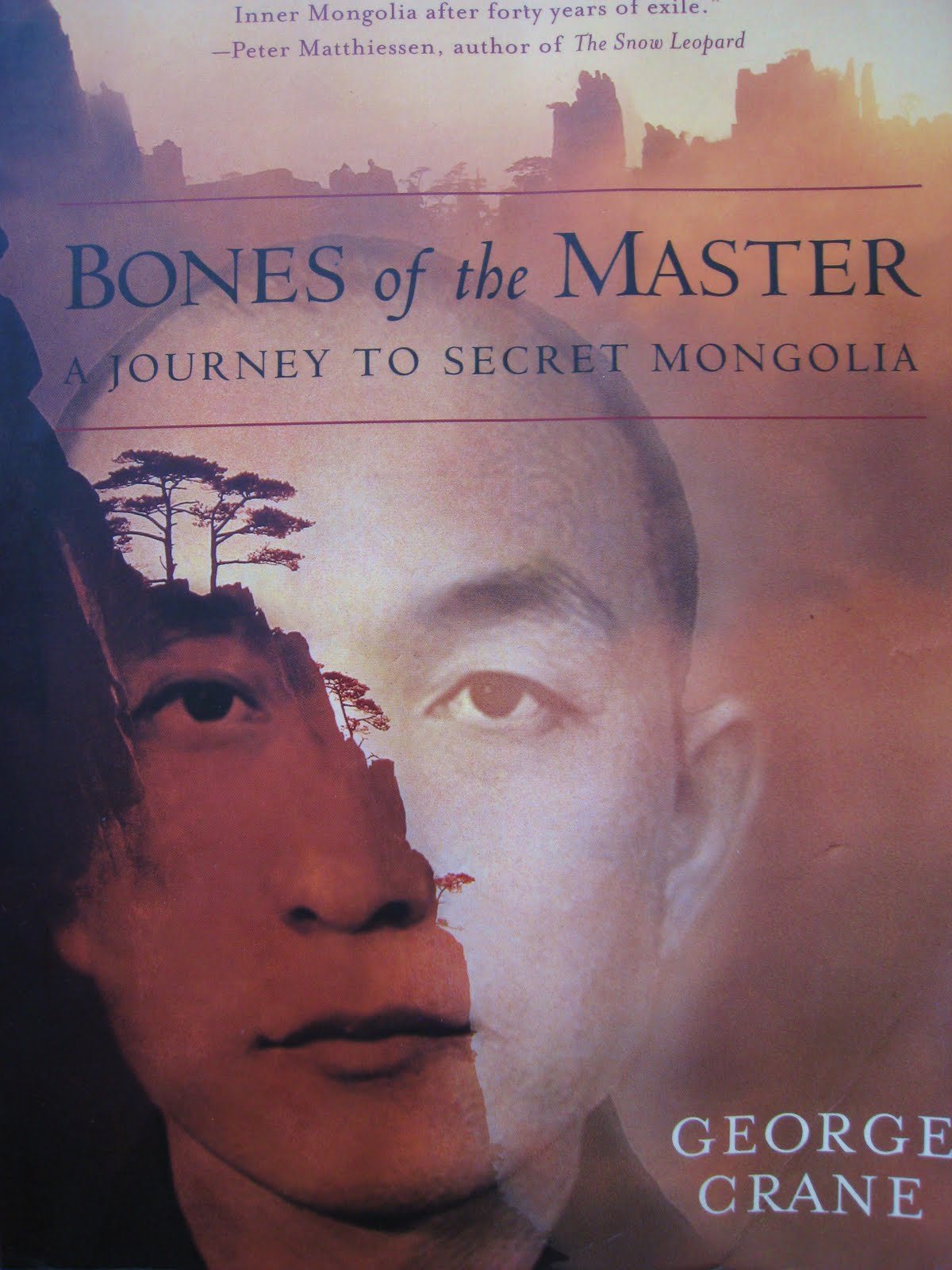
In 1959, Tsung Tsai, a Buddhist monk, escaped from the Red Army troops that destroyed his monastery, and walked three thousand miles across China to Hong Kong, nearly dying in the process.

Years later he ends up living in upstate New York, where he builds his own house and lives a monastic life. During a snowstorm, he meets his neighbor, a young hippie poet from New York named George Crane. An unlikely friendship forms between them as they sip tea and read poetry together. Tsung Tsai shows the poet some poems in Chinese, and George gets very excited about the idea of translating them into English. But Tsung Tsai knows that it is not yet time. “Hurry-worry never works,” he says.

George Crane later writes about this extraordinary friendship (and and their daring journey into Lower Mongolia) in his delightful book called Bones of the Master—A Journey to Secret Mongolia.

I often think about Tsung Tsai saying, “Hurry-worry never works” in reference to my own life. Lately I’ve been obsessively driving myself to “get things done.” My busy little mind says, “If you can just finish this project, then you can relax.” Once I finish it, I’m saying, “You’ve got to get those letters out.” On and on it goes. Soon there is no time to breathe (because of my own self-imposed deadlines), and my body becomes tense and stressed out. It’s all about “me” having to get “my” projects done. What a vicious cycle.

Today, while meditating, I could almost feel the frenzied rush of “hurry-worry” thoughts. I notice that it’s all about “my” thoughts, “my” feelings, and “my” worries. What would it be like not to have these thoughts? What would it be like not to be constantly thinking, “I need to do this, I need to do that?” I realize that I don’t have to live with these little gnats constantly buzzing around in my head. All I need to do is “flush” them out by dropping inside and being still. If I place my attention on what’s happening right here, right now, there's no room for the "me" thoughts. And when they come back (which they most certainly will), all I need do is take a few moments to be still once again. What’s left when they are gone? Nothing but empty awareness. When there’s no one there to claim these thoughts, there is nothing but peace. What a relief.

The challenge is that if I do slow down, I have to look at why I’m so driven to get all this stuff done. I have to ask, “What is all this “doing” about? Do I need to create meaning in my life through doing, and more doing?” Is it all so that I will feel important, fulfilled, and happy? Am I justifying my obsessive behavior by saying I have to make money, support my family, and make a contribution to the world? Is it so that I can avoid seeing who it is that I truly am? Who would I be without any of that? A very peaceful guy.

I remember an interview Lama Surya Das had with the Twelfth Gyalwang Drukpa, a little Tibetan guy with a sunhat, big glasses coming down his nose, and a hilarious expression of gleeful laughter on his face. He told Lama Surya Das, “I would say that not doing too much is the important thing. We tend to try to overdo everything. Such conceptual actions just create more karma. Consider nondoing, nonaction for a while, and leaving things as they are.”

And here’s the kicker for me. In reference to his own life, the Twelfth Gyalwang Drukpa said, “I have a mission of not doing anything. My goal is not doing anything, ultimately. Just being. That’s it.”

Now that’s something worth doing!

Saturday, October 10, 2009

Snookered


The waves are breaking gently on shore as I take my regular walk down Baldwin beach on Maui. The drop-dead gorgeous beach stretches a half-mile before me, with hardly a soul on it. I take in the special color of the water today, a light turquoise that extends one hundred yards offshore. My dogs walk along beside me, sniffing for any food that may have been left behind by previous beachgoers. I take a deep lungful of the fresh salt air, clean and pure after blowing across thousands of miles of ocean.

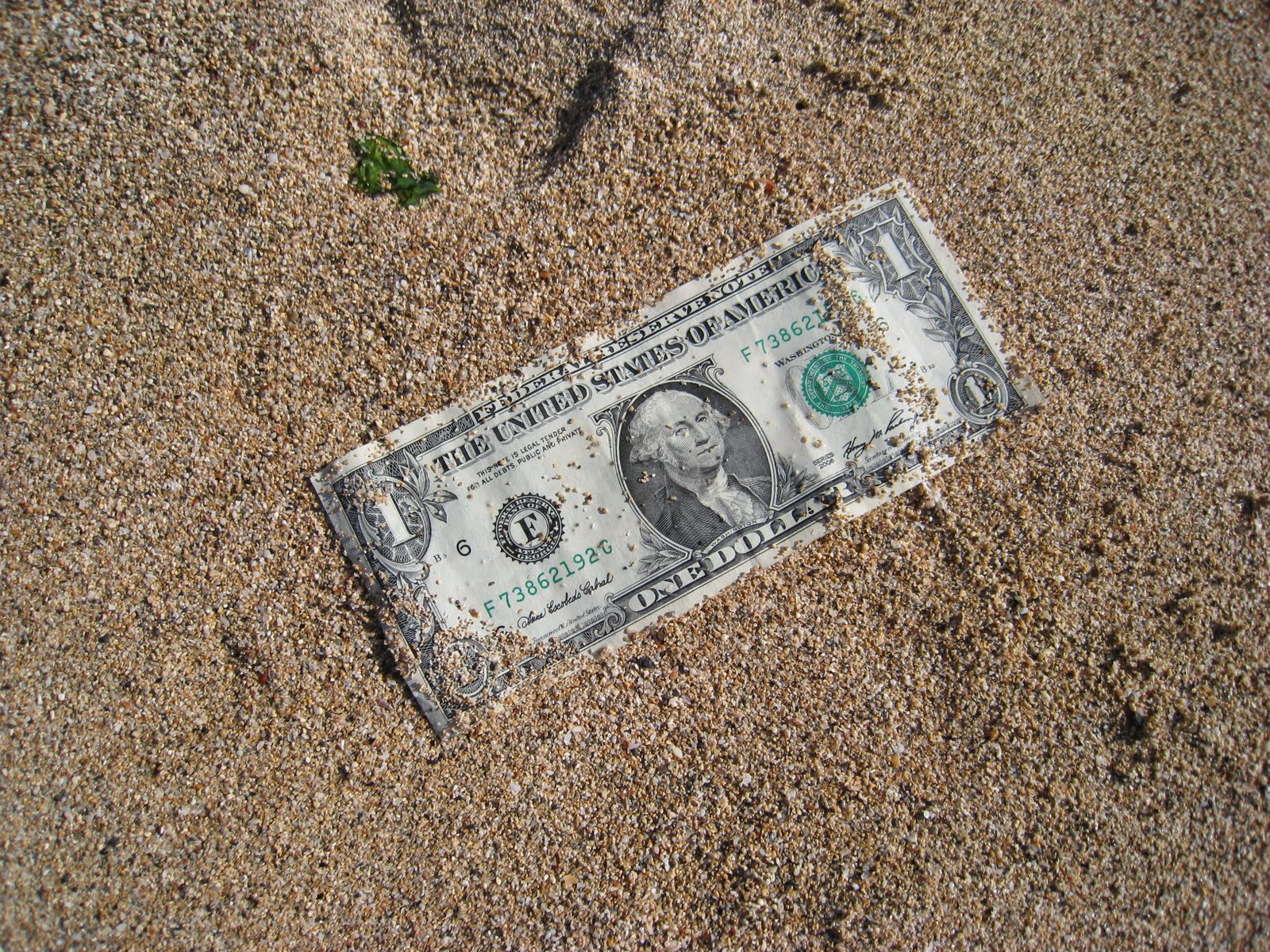
A few feet ahead of me I see a dollar bill lying in the sand. How did that get here? I think. I don’t see anyone around. Maybe I should pick it up and find its owner? I reach down to pick it up, but the wind blows it a little further up the beach. Well, maybe it doesn’t belong to anyone any more. Finders keepers. But is it worth chasing a dollar bill? A dollar bill doesn’t get you very far these days. I take a few steps and stretch out my hand to grab it.

Once again it flutters in the wind and blows further up the beach. Now this is getting crazy. I’m not going to let that dollar bill get away and disappear into the bushes. The wet bill lies flat on the sand. This should be easy. Grab it quick! I almost have it in my hand when, whoosh, it flutters a few yards away. Damn. I nearly had it.

I’ll give it one last try. I take a few steps, pulling the dogs on their leashes. They look up at me, wondering what I’m doing. Now—I’ve got it! I zip my hand out for the final grab, when the bill suddenly takes off high into the air, reeled in by two guys who are laughing hysterically.

I start laughing along with them, “I’ve been snookered! Good one!” I yell to them over the wind. “You guys are good!” They’re bent over in laughter and I am too. “Next time put a twenty on!” We’re all in hysterics. I wave and continue down the beach with a big smile on my face.

How interesting, I think. Here I was, peacefully enjoying my walk, when out of nowhere, a desire showed up at my feet in the form of a dollar bill. My first reaction was, “Can I return it to its owner?” The next thought was, “I just can’t let this go. I’ve got to grab it.” I jumped, then jumped again, reeled in by my desire, totally forgetting my peaceful walk.

Life shows up in wonderful and mysterious ways to show us exactly what we need to learn . . . and I’m still smiling.

Saturday, October 3, 2009

Geezer in Paradise


Aging is like going through a funnel. You start out with so much room, spinning so fast, wondering just how far you can go, but in the end you wind up going through the hole.
Albert Brooks

There is no set date for it, but geezerdom seems to start around the time when the odometer rolls down towards 70. It’s very different from being a fresh, young “senior citizen” who has just turned 55, and signed up for AARP, excited that you can get discounts at the movies. Geezerdom comes later, when your body starts to fall apart in a major way, your face starts to looks like a cadaver, and you become invisible to the world.

I thought that by moving to Hawaii, I could add on a few more years of looking like a young, healthy “senior.” I could at least have a tan, wear my hair in a pony-tail, and look like an eccentric hippie. But not so. The young, hip clerks in grocery stores either look right through me, as if I don’t exist, or they make an effort to be real polite, “Do you need some help with your bags today, sir?” No, of course I don’t need help with my goddamned bags! Perhaps if I lived in Florida, and not Hawaii, it would be different. Both the clerks and the baggers would be older than I am.

Well, at least there is one fellow geezer here on the island who hasn’t faded into the woodwork. His name, of course, is Ram Dass, the grand elder statesman who inspired a whole pack of baby boomers through the sixties, seventies, and eighties. He wrote the cult classic Be Here Now way over 35 years ago. His marvelous book Still Here shows boomers how they can age gracefully. Since his stroke ten years ago, after which he was confined to a wheelchair, Ram Dass doesn’t get around much anymore. But he still shows up just about everywhere on Maui to lend his shining presence to events.

When he holds his monthly get-togethers, there are always a lot of young people—island hippies, a young mother with a baby at her breast, bronzed young men with sun-bleached hair in a ponytail. Now, unlike me, they don’t see Ram Dass as an old fart. What’s the difference? One difference is that they admire him for all the drugs he has taken (this is Maui, remember?). Another is that he laughs at himself a lot—and at the world. And most of all, he sees no difference between himself and anyone out there. For Ram Dass, there is just life going on around him. He doesn’t judge people their looks, what they’re wearing, or by how young or old they are.
And most people don’t judge him; they love him.

So the next time I feel invisible or feel judged for being old, it is an opportunity for me to see what is beyond age, beyond looks, and beyond the body. Let’s face it, we scare the hell out of these guys. They’re terrified they will become like us—and they will!

If we can find it in ourselves to love them—even if they appear not to see us, or speak slowly and in a loud voice, believing we’re deaf and stupid—love will melt away all the differences. Because love is all there is, and it is who we are.

Saturday, December 27, 2008

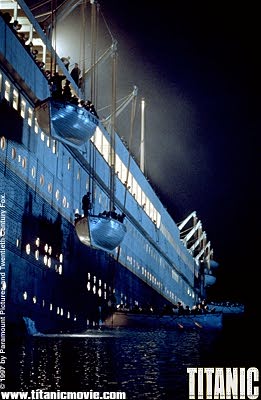
Arranging the Furniture on the Titanic


You want to hope for something better than what you have right now, don’t you? Otherwise you wouldn’t be hoping. But then, you forget that you have it all right now anyway, and you don’t know it.
Anthony de Mello

I love setting intentions for the New Year. There’s something very satisfying about getting clear on where I’d like to see my life heading. I usually come up with a list of twenty or so intentions, such as “to live simply, laugh often, love deeply” or “to invest wisely, see my assets grow, and have a worry-free income of 5%.” When I look back at the previous year, I’m always amazed to see how many of these intentions have manifested—often in totally unexpected ways. I soon learned how important it is to be very specific in what I ask for. One year I forgot to mention that I wanted a year free from legal hassles. That was the year I got sued.

Recently I’ve taken a different approach to setting intentions. I’m more willing to let God, Source, or Spirit be in charge, rather than “me” trying to be in control of my life. I realize that I have no idea how spirit is meant to move through this body-mind. Who is to know if what the “little me” wants is for my highest good? All it wants is to avoid pain and find pleasure. Lately it has come down to one simple intention: to live each moment in present moment awareness—and let God take care of the rest.

I've also begun to question whether setting goals really takes us where we want to go in our personal lives. It works well for business, which is quantifiable, but does it work for finding something as abstract as happiness? There are three important things we often miss:

1) All goal setting is future-oriented—and there is no future. It is essentially an attempt to create a new and better dream for ourselves. If we do the steps in our plan, we believe that we’ll feel better, be more fulfilled and happy. But doing things to make the ego feel better is all happening within the dream of illusion. Because it is within the dream, we’ll inevitably experience the pain and suffering that comes along with it, no matter how successful our action plan is. We’ll have a few moments of feeling good, believing that “we” (our egos) have accomplished something. But then dissatisfaction will set in and we’ll go on to the next thing to accomplish, and the next, all towards some impossible end when all our goals are satisfied. But there is no end.

Fulfilling our goals can at the most bring short-term happiness (otherwise, why would we need to go on to the next one?). We have to ask what it is that we really want, beyond satisfying our desires. What if we were to turn our attention inward to finding happiness that doesn’t come and go, and fulfillment where there is nothing that needs to be filled? The first step is going beyond the illusion that there is something out there in the future that will make us happy.

As Eckhart Tolle says, “The joy of Being, which is the only true happiness, cannot come to you through any form, possession, achievement, person, or event—through anything that happens. That joy cannot come to you—ever. It emanates from the formless dimension within you, from consciousness itself and thus is one with who you are.”

2) Most intention setting is based on the fundamental assumption that there is something wrong with me, and I have to somehow “fix” it. For whatever reasons, I am not enough just the way I am—because if I was enough, what would there be to “fix”? Working with intentions distracts us from the realization that we already are whole and complete.

Can you conceive of the radical thought that right in this moment there is absolutely nothing missing in your life?

The mind will immediately say, “No, no that’s not possible! I need to be a better husband, I need to be more surrendered, I need to inspire others.” But what if there was absolutely nothing missing in your life right now? Where would that leave you? You’d have to let go of all your dreams about the future and realize that right now is all there is.

As Alan Cohen says, “You are not a black hole that needs to be filled; you are a light that needs to be shined. The days of self-improvement are gone, and the era of self-affirmation is upon us. It is time to quit improving yourself and start living.”

3) No matter how many action steps you take, no matter how many goals you set, how many values you identify, you’re still trying to patch up the ego—and the ego, by its very nature, is unfixable. It’s the job of the ego to be dissatisfied and always want more. Trying to fix the ego is like trying to plug the holes in a sinking ship. The boat is eventually going to sink. The question is—are you willing to jump off the boat and be free?

If you were “enough,” if you had no fear, and you were living in the fullness of who you are, would you need an action plan? Does someone like Eckhart Tolle live his life from an action plan? I doubt it. From that place of being fully present, you would know that in every moment you were doing exactly what you needed to be doing, that your life was being revealed in exquisite perfection from moment to moment.

What if your 2009 action plan was not to have a plan—other than to offer love now—and trust that your life is unfolding perfectly just as it is?

David Deida speaks to this when he says, “Enlightenment is the capacity to open and be lived by the love that is already, miraculously, living your life, despite all your current torment and refusal. Instant enlightenment is to offer love now—whatever the circumstance—without waiting for things to get better.”

Setting goals can be helpful in this difficult world, even if it is rearranging the furniture on the deck of the Titanic as it sinks slowly into the silent sea. We might as well enjoy the ride. Action plans, workshops and self-help books help us to feel good about ourselves. But they will never bring us the happiness we are looking for. That’s because we are creating our goals using the conditioned mind—the mind that feels it needs to find solutions and come up with strategies to solve its problems. It asks all the wrong questions, based on likes and dislikes, the past and the future, and avoidance of pain.

To go beyond conditioned mind to clear mind, it helps to enter into a process of self inquiry, asking the question, “Who is it that wants to make goals?” or “What is it that needs to be renewed”? Until we are willing to drop into that place of “not-knowing” that these questions lead to, achieving every goal on our list will not bring us inner peace. That can only come through unconditional awareness, where we don’t need anything and there’s nowhere further to go. That doesn’t mean we don’t do anything with our lives, it just means that there is no longer anyone there “doing” it.

Having said all this, I'm still having fun setting intentions for the New Year—though I'm less attached to the results.

Friday, November 14, 2008

When Bodies Break Down


To identify oneself with the body and yet to seek happiness is like attempting to cross a river on the back of an alligator. Ramana Maharshi

After a week-long trip to Washington, DC, I come back to Hawaii with a cold, a nagging cough, and a body that feels like it’s been run over by a truck. My eyes are burning, my brain is in a fog, and all I want to do is climb into bed and sleep. When I finally do sleep, I wake up just as tired as before.

This fatigue is nothing new. Recently I found out that I have parasites, and may have been carrying them for twenty years. I did one of those unpleasant treatments, which is worse than the disease. Just yesterday I found out that the treatment didn’t work, and not only that, the parasites are even more active! No wonder I’m so tired all the time. Together with a minor squamous cell surgery that is not healing, and the continuing existence of prostate cancer cells in my body, I feel like one of those old rust-bucket cars, where the muffler falls off, and as soon as you fix that, then the transmission goes.

One of the side effects of getting older is that the body seems to break down with alarming frequency.

I love what Robert Adams, a spiritual teacher, said. This was when he was ill with Parkinson’s disease, and shortly before his death in 2004: “I want to let you in on a little secret. There are no problems. There never were any problems, there are no problems today, and there never will be any problems. Problems just mean the world isn’t turning out the way you want it to.”

The challenge, as always, is how to be OK when things are not going the way you’d like them to.

What can we do?

1. Accept that this is what is happening. We’ll find ourselves a lot more peaceful if we can say, “OK, this is what is happening. If I fight it or struggle against it, it will only create more suffering.

2. We can also say, “I have a preference that things would be different, but this is what is. Right here, right now, in this moment, all is well. Behind my discomfort there is a peace that is unchanging. If I can be still for an instant, it is there.”

3. We can take whatever steps are necessary to take care of things. I can see my doctor about another way of getting rid of the parasites; I can work more on an anti-cancer diet; I can be grateful for the love that is present in my life in every moment.

Tuesday, October 28, 2008

Pema Chodron


Sometimes I have trouble with the Buddhist teachings, especially when they get into the Eight Worldly Dharmas, the Six Kinds of Loneliness, the Six Paramitas and all that stuff. But, after some resistance, I became totally absorbed in Pema Chodron's book When Things Fall Apart: Heart Advice for Difficult Times. Here are a few quotes that lit me up.

To be fully alive, fully human, and completely awake is to be continually thrown out of the nest. To live fully is to be always in no-man’s land, to experience each moment as completely new and fresh.

The process of becoming unstuck quires tremendous bravery, because basically we are completely changing our way of perceiving reality, like changing our DNA.

Without giving up hope—that there’s somewhere better to be, that there’s someone better to be—we will never relax with where we are or who we are.

We can’t attain enlightenment, let alone feel contentment and joy, without seeing who we are and what we do, without seeing our patterns and our habits . . . it’s a process by which self-deception becomes so skillfully and compassionately exposed that there’s no mask that can hide us anymore.

The middle way is wide open, but it's tough going, because it goes against the grain of an ancient neurotic pattern that we all share. When we feel lonely, when we feel hopeless, what we want to do is move to the right or left. We don't want to sit and feel what we feel. We don't want to go through the detox. Yet the middle way encourages us to do just that. It encourages us to awaken the bravery that exists in everyone without exception, including you and me.

Friday, October 10, 2008

New Beginnings

Day 27
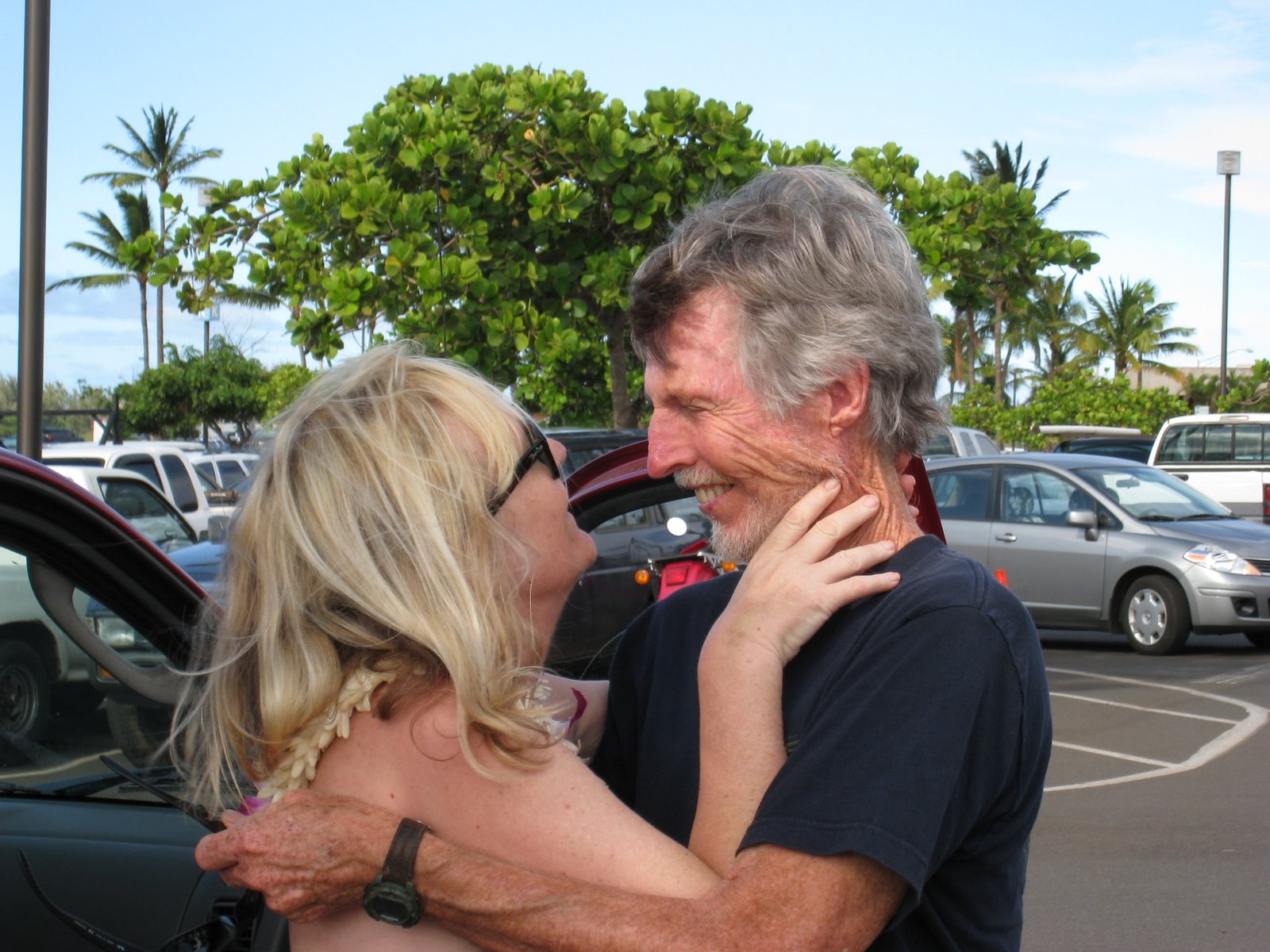
I’m not prepared for what I see when Linda walks into the terminal. She looks young, radiant, and glowing. We hug each other passionately. “You’re not going to believe it,” she says, looking at me with eyes of love. “I’m a different person. I've been reborn.”

"I can see that," I say, placing a sweet-smelling lei around her neck. "It's so clear."

This marks the beginning of a new life for both of us.

And it all started with a simple intention of doing a month-long retreat.

Doing the Work

There comes a time in the affairs of man when he must take the bull by the tail and face the situation. W.C. Fields

Day 26
When Linda calls, I can’t believe she's the same person who left a few days ago. There’s a new aliveness and strength coming through her voice, like someone who has woken up from a long nightmare to finds themselves fully and joyfully alive. What a courageous journey she's been on. She'll be home in less than twenty-four hours.

Without my usual social interactions during the retreat, I’m noticing that when I talk to people, that I smile a lot. Nothing wrong with that, but at some point the smile becomes forced. I can even feel the muscles of my face tighten when it happens. I remember David Deida, an old friend, saying, “Peter, I often see you smile when you’re not feeling like smiling. It’s not authentic. What is it that you’re hiding?”

I have a session with David and Tom, my two therapists, and tell them about my compulsive need to smile. “It’s your way of coping.” Tom says. “You try and please everyone by being nice.”

“Yeah,” I say. “Smiling is my way of keeping everything on the surface, so I don’t have to show any emotions. I can keep everyone at a distance. It’s like skippping a stone across the surface of a pond."

David says, “So, this is a chance for you to be more serious than you take yourself to be.”

“That’s so true. If I was serious, friends would see who I really am - a frightened little child that feels completely worthless, I'm terrified that they'd abandon me.”

Tom hands out one of his helpful little lifelines: “Be gentle with yourself. Your friends clearly see who you are—a kind, loving person."

I love these guys.

A thought pops to mind. “I also smile so that I can avoid confrontation of any kind. I’m terrified of strong, aggressive men. I couldn’t stand to be in the same room with someone like Donald Trump or Vince Vaughan.” Heat courses through my belly. “Wow, there’s so much rage in there!”

“What would it be like to let that masculine side out more?” David asks. “What if you could let more feelings come through—anger when you’re angry, sadness when you’re sad, without being afraid it will overwhelm you?”

“That would feel so good.”

“And you can be the curious observer, watching it all,” Tom adds.

It’s hard to believe that I’m still dealing with the “wounded child” at my age. But if it helps me open my heart and be authentic, I don’t care if I’m a hundred years old and still doing this stuff. It’s not done until it’s done. Ya gotta do the work, baby.

Friday, October 3, 2008

Renewal

Day 21
Clare calls from the Ibogaine Clinic to tell me that Linda has gotten through her first treatment with an A+. There were two doctors with her the whole time. A number of people have died while taking ibogaine and they take every precaution.

I’ve had my phone on “silent” for the retreat, but recently turned it on to make sure I didn’t miss a call from Linda if she needed me. The phone rings and it's my dear friend Christine calling from New Mexico, saying that she and Kenn will be visiting Maui in November. What wonderful news. Once I feel complete in myself, the people I love most in my life seem to be miraculously showing up all around me.

Linda calls. It's like talking to a completely different person - clear, strong, and at peace with herself. What a huge step this is. Of all things, she met with a naturopath today and enjoyed it. She’s even eating real food (instead of caffeine and sugar). She's tired after the treatment, but tells me that she went to a place where constellations of stars rearranged themselves into form. "I came away with a deep acceptance of what is," she says. "It was like my brain was reset to the clarity and innocence of a six-year-old. And I don't have any craving for the pain meds." It's almost too much to believe.

The Core of Life

Let’s remember why we’re here at retreat: for the amazing opportunity to really look into the core of our existence, the core of life itself that is so easy to overlook. It’s not easy to pay attention to it, because it’s not noisy and it’s not clamoring for attention like all other aspects of the human mind. Adyashanti

Day 20

With Linda gone, I'm sure that my fear of abandonment will show itself. I've been haunted by this fear ever since my mother died when I was twelve. The frightened child in me believes that if someone is not physically present, they might just as well be dead. That was my experience as a boy when I was told to “get over it” after my mother disappeared off the face of the earth. No one in the family ever spoke of her again; photos were hidden away; any sign of her was eradicated. In my twenties, this fear left me suicidal when I went to live alone in Paris, leaving behind friends and family. Unable to make friends and not knowing the language, I spiraled into depression. Since then I‘ve been afraid that if I was left alone again, the depression would come back to devour me.

Now I have the chance to sit with my aloneness. Since I'm on retreat, I don't want to take any easy outs - calling a friend or distracting myself on the computer. I sit quietly on the lanai, watching the thoughts float up to the surface. How interesting, there's the thought, "Where is Linda now? I'm on my own. No one even knows I'm here. Maybe I should call someone . . ." Much to my surprise, the thoughts come up and drift away; they no longer have any charge. Inside of experiencing emptiness, I'm experiencing fullness. What was once an “empty hole” needing to be constantly filled is now whole and complete. It is my own Self . . . the gift of retreat.

Ibogaine


Day 20

As soon as I start to slow my life down, Linda begins to undergo a major shift around her health. For 12 years she has lived with Behcets Disease, an auto-immune illness similar to Lupus or MS. It leaves her in a state of almost constant pain. To help relieve that pain her doctors give her pain meds, gradually having to increase her dosage as her tolerance to the meds goes up. Now she needs enough medication to kill an elephant to keep the pain tolerable. Even with the meds (and partly because of them), her quality of life becomes barely tolerable. For days on end, she barely gets off the couch. She often longs for life to be over, so that she can escape from the constant pain. It is a nightmare of waking up every day with what feels like the flu, along with mouth sores, painful rashes, aching joints, and a swollen belly.

While searching on the internet, Linda comes across a treatment for chronic pain called ibogaine. Ibogaine is a natural substance made from the bark of the iboga tree in West Africa. It has been used for centuries by the pygmies in Africa for its healing properties. When taken, it provides a psychedelic experience, where many go through a “life review.” Only recently scientists have found out that it also is a highly effective drug for treating addiction of all kinds, from heroine, to cocaine, to alcohol, to pain meds, to gambling. It seems to “reset” the brain, taking away the cravings that drugs create.

Linda gets so fed up with her twelve-year dependency on pain meds that she calls the Ibogaine Clinic in Rosita, Mexico and decides to go next week for treatment. For Linda to make this choice, and get on a plane by herself, is huge. Believe it or not, she leaves tomorrow. It’s the first time we’ve been apart in six months, and the first time she’s gone anywhere on her own in the seventeen years we’ve been married.

I get to spend the week alone.

Thursday, October 2, 2008

Being

Day 15 The idea of just stopping—nowhere to go, nothing to do—becomes more and more familiar. I always had a fear that if I stopped, I’d be like an old person in a nursing home, staring vacantly out into space. So far I’m not drooling—not yet anyway.