Wednesday, March 5, 2008

Radiant Joy


Your head is already in the tiger’s mouth. There is no escape.
Ramana Maharshi
A few months ago I found out that I had advanced prostate cancer. That’s the name they give to cancer that comes back after a radical prostatectomy. At first I thought I would die in a year and go out in a blaze off glory. I was almost disappointed when I found out that the prognosis is around ten or so years. The treatment options were confusing and a little scary, with possible side effects ranging from impotence, to incontinence, and serious bowel problems. I opted for radiation, which means receiving forty treatments over a period of two months.
Every day, except weekends and holidays, I climb into the car to make the forty-minute drive to the hospital in Kahului, Maui; I bring the dogs along for company, a book on tape for entertainment, and enough water so that I can fill up my bladder before each treatment. I drive past some of the most beautiful sights in the world—the famous windsurfing beach called Hookipa, the West Maui mountains in the distance, and the massive 10,000 foot Haleakala mountain—House of the Sun—on my left. It’s not exactly a chore. I park my car in the specially assigned spaces for cancer patients (the best perk of all) and walk across the road to the Pacific Cancer Clinic.
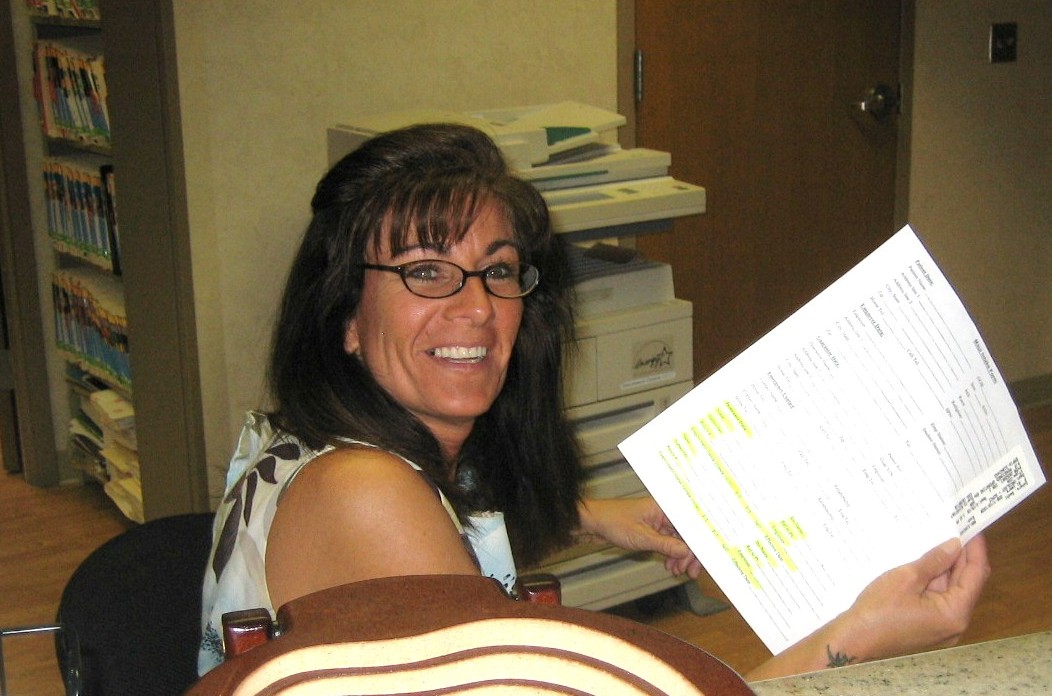
“Peter, how are you?” Jeannie asks from behind the front desk. Energetic, petite, and always cheerful, she greets each cancer patient personally as they come in for chemotherapy or radiation. She is one of those extraordinary angels that lights everyone up with her warmth and caring.
“I’m great Jeannie. How’s your son doing?”
“He’s good,” she says cheerily. Her son Brock was severely injured in a motorcycle accident two months ago and lost his left foot.
“You’re amazing Jeannie. I don’t know how you do it.” She not only takes care of everyone who comes to the Cancer Clinic, but her son, her daughter, and husband.
Nerissa appears at the double doors with her wonderful smile and signals that it’s time for my treatment.
“Got to go.”
“Bye . . .”
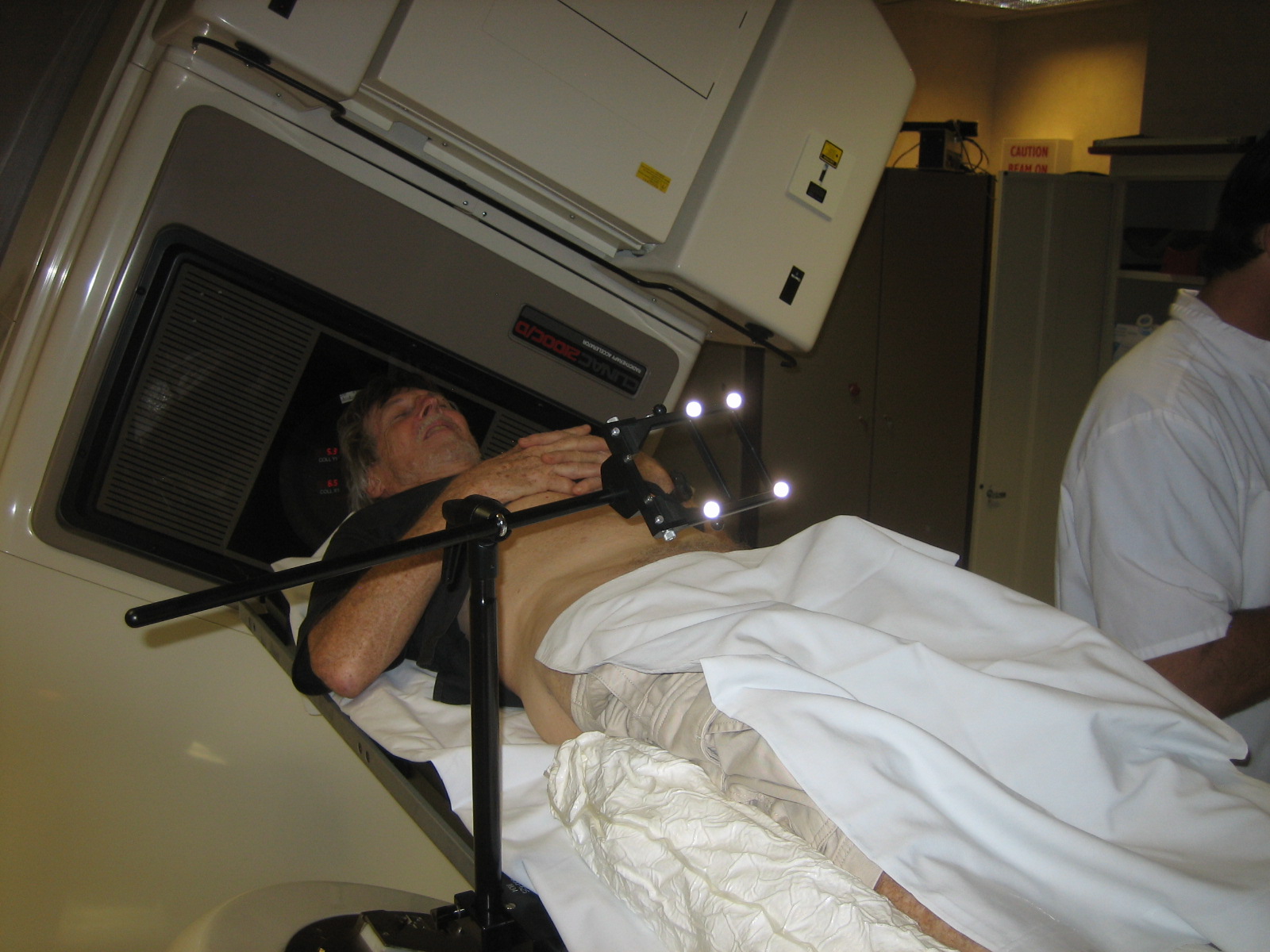
On the way to the x-ray room, I wave to Janice at her desk, then say hello to Tim and Steve, the two radiology technicians—those unsung heroes who spend all day treating folks with every form of cancer imaginable—brain cancer, stomach cancer, prostate cancer, breast cancer—some of them so sick they can’t even walk. Yet somehow they remain cheery and upbeat. They lead me into a room with an enormous machine that looks like something out of Star Wars. The body cast for my legs is already waiting for me on the narrow metal platform. I take off my shoes, and feeling like a fighter pilot fitting into his flight suit, I put my legs into the cast and lie back down. The cast ensures that my legs are in the same position for each treatment.
Whether out of laziness or because it’s sunny and warm most days in Hawaii, I normally wear a T-shirt and shorts—and nothing else. I slip down my shorts so they can see the tattoos on my hips and pubic area.
“Hope you don’t mind,” I say, “I’m going commando again.”
“Don’t worry, we’ve seen it all,” Tim says.
“You’re just an old hippie,” Steve laughs.
Meanwhile Tim moves the table into position with a remote so that I am in the exact spot for the radiation beams to reach my prostate bed. Even a millimeter off and the radiation will hit other parts of my body.
“Did you get up to Baldwin beach on the weekend?” I ask Steve, as he moves my body slightly on the table so that my tattoos line up with the infrared beams coming from either side of the room.
“Oh yeah, what a scene— families, boogie-boarders, tourists, guys drinking in the back of their pick-ups, another selling grass to the tourists—I had a ball.”
“Not to mention the babes,” I laugh.
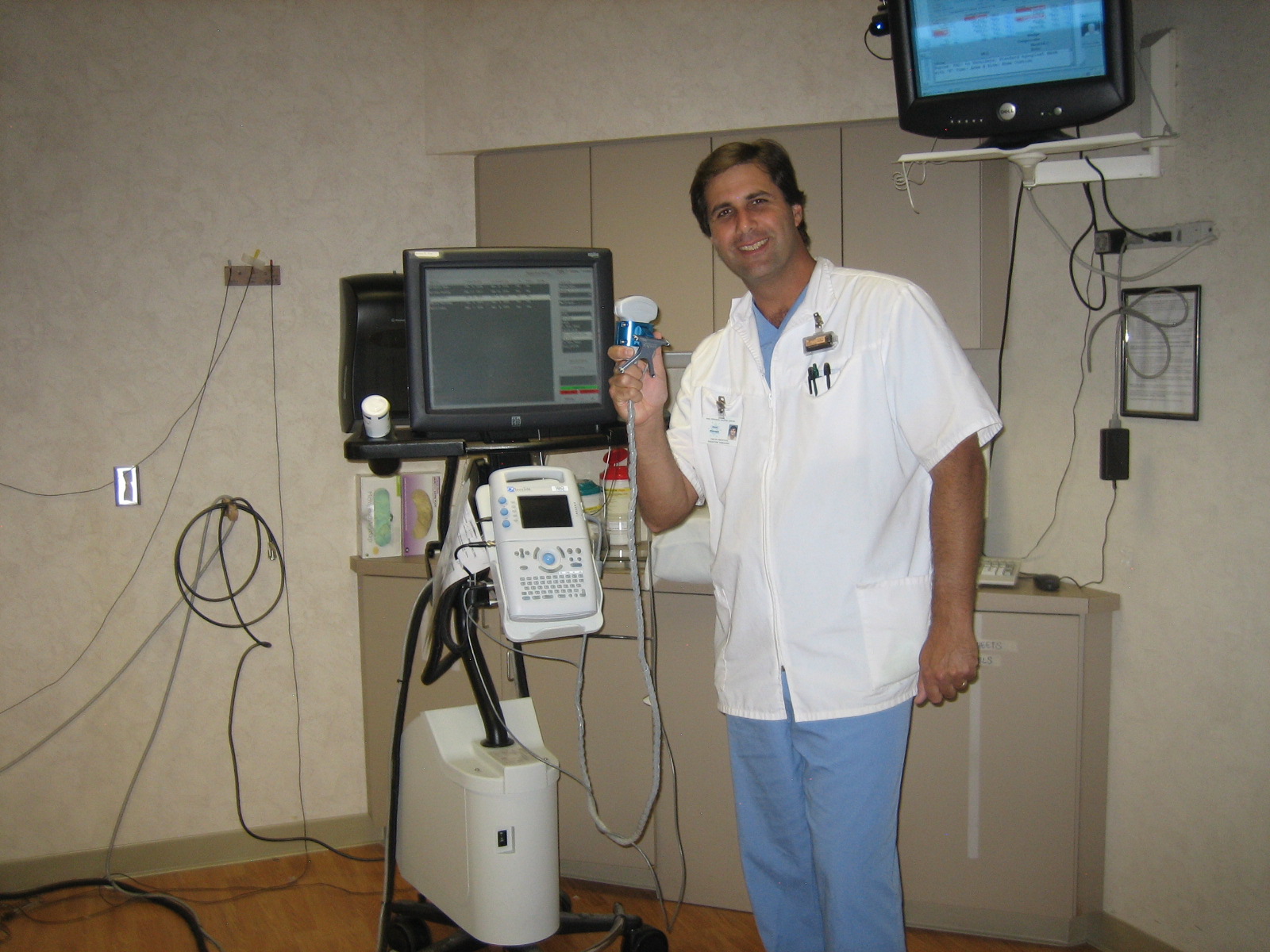
“Here comes the goop,” Steve says, as he slides the sonogram reader over my lower abdomen. It feels cool and not unpleasant. Then he presses down on my bladder to get a reading. The pressure is intense. “Sorry about that.”
“No problem. Have you ever had one burst?”
“Not that I know of,” he laughs.
He and Tim watch on the TV monitor as the different overlays from the sonogram and the IGRT match up.
“Nice full bladder,” Tim says. “It looks like a Beefeater’s hat.”
“To me it feels like a big water balloon.”
“Almost there . . .” They make their final adjustments. “OK, you’re set.”
“Fire away!” I say, as they leave the room, electronically closing the foot-thick door behind them. The stereo in the corner plays Hawaiian music from the local radio station. A camera on the ceiling monitors me lying on the table. I lie with my eyes closed, alone in the room, as modern science does whatever it’s meant to do.
Soon there is a whirring sound as the machine starts to circle around my body on the table. Tim and Steve operate the machine remotely from another room. After rotating 45-degrees the machine stops and its bulbous head makes a clicking noise like a camera. Then there is a loud sustained beeeeeep that seems to go on forever as it shoots invisible rays down into the core of my body. Warning lights flash over the door: “CAUTION – BEAM IN USE.” The beep lasts for twenty seconds, and then the machine whirs to a different angle. More clicking, more beeps, as the machine moves around me, stopping at seven different angles to shoot 70 centigray of radiation into my body.
I know that some of these rays are damaging my bowel and my bladder, and that they may leave me impotent, but what could I possibly worry about? I lie on the table in total joy, a half smile on my face, distantly hearing all the noises going on around me—music drifting out of the radio, the machine whirring, the machine clicking, the hum of ventilation fans. I am the still center in the midst of all this activity. I could be worrying about what might happen in the future—will the cancer metastasize, will I die in pain and suffering?—but right now I feel fine, apart from a full bladder. All worry is nothing more than a projection of what may or may not happen in the future. In truth, there is no other moment other than lying here on this table right here, right now. Cancer, or no cancer. What do I care? This body will someday fall away. Whenever it does, I get to go home. The tiger has my head in its mouth, and I’m totally surrendered to whatever happens. There is no escape.

Saturday, October 27, 2007

Riding on the Back of an Alligator


To identify oneself with the body and yet to seek happiness is like attempting to cross a river on the back of an alligator.
Ramana Maharshi

“I can’t stand those Eastern religions,” Aruni says, throwing her hands up in the air in exasperation. “They all deny the human body.”
“Yeah,” says Natavar from his position lying on the floor, his head on a pillow. “We all tried that and it didn’t work.” Natavar lived in an ashram for years and still hasn’t quite gotten over it.
“You’re not kidding,” Nita says, with a hearty belly laugh. Nita and her husband Natavar both lived in a spiritual community for over ten years. “I spent years not having sex, eating vegetarian food, and covering up my body—but it never got me any closer to God. I’ll take a nude beach and steak any time.”

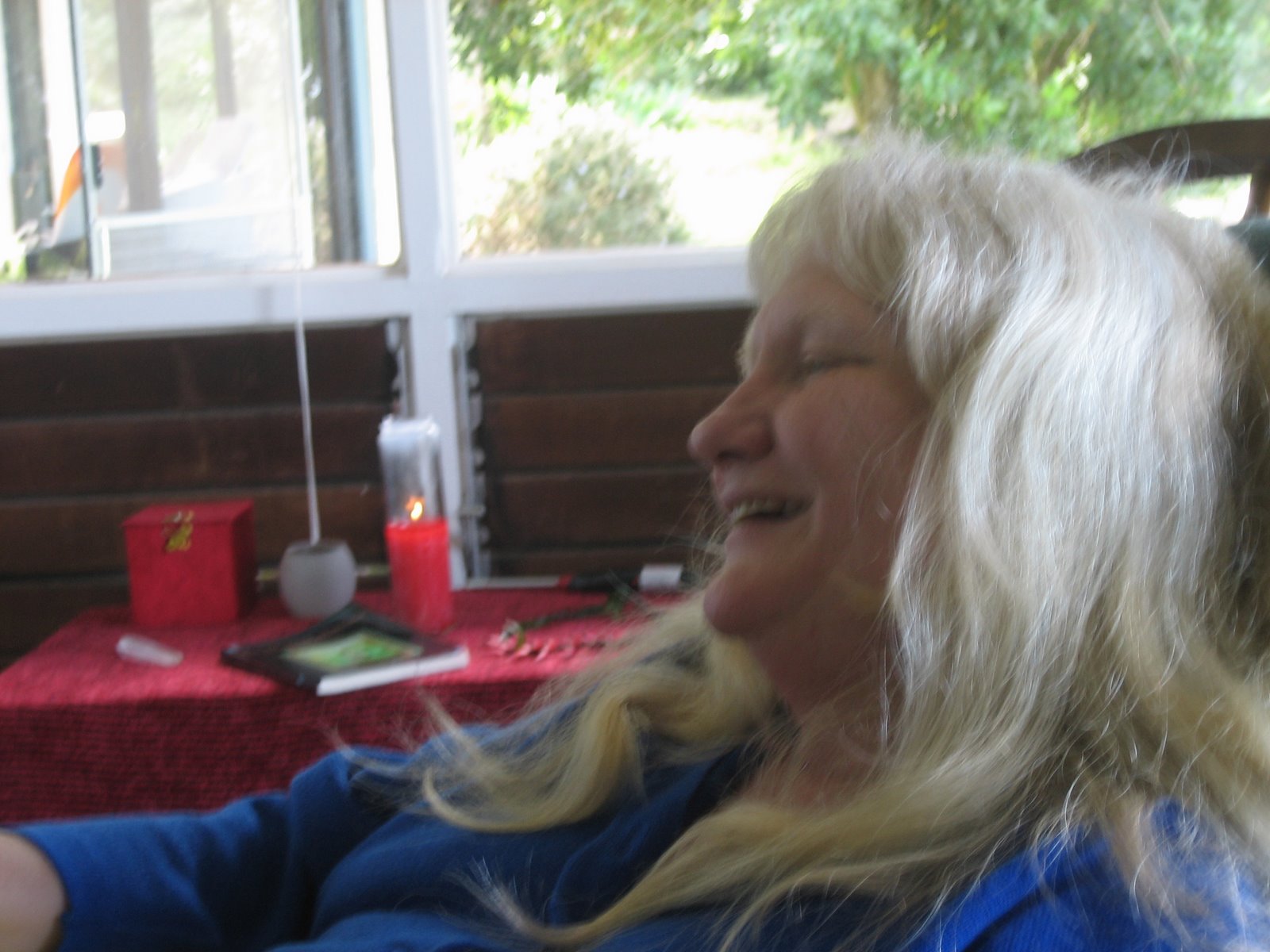
“Yes,” Donna says, rocking back in her comfortable chair, her long blond hair flowing down over her shoulders, her ample body covered in a long, flowing dress. “We need to celebrate being in the body; we need to bring spirit down into the body.”
“Otherwise we’ll be zombies—disconnected from our bodies,” Aruni chimes in. Aruni is a thin, intensely neurotic woman with a tenuous grasp on reality.
Everyone nods in agreement. There are about fifteen of us sprawled around the living room, the conversation centered on how to be happy. Donna is leading the session, part of the SOUL school (School of Unconditional Love) that Donna has created. Judging from the enthusiastic response of the group, I can tell that they’re convinced that happiness comes from being in a human body.
What a recipe for disaster, I think. There’s nothing wrong with celebrating the body, but believing that we are the body will create nothing but pain and suffering. The body is not permanent—it will fail, it will die. How can I explain this to them?
The moment I think of speaking my truth in front of everyone in the room I go into a panic, terrified that no one will get what I say, or even worse, get angry; I’ll either freeze up or say something that is totally off the wall. It’s happened so many times before—I try to express my thoughts, but all I get back is blank stares. The words come out and disappear into space.
But like Peanuts running up to kick the football for the umpteenth time, I jump in anyway: “I don’t understand. How can we bring spirit down into the body when the body already is spirit? Isn’t it the other way round? Spirit or the Self isn’t ‘out there’ somewhere. It’s who we are.”
I look around at the other faces; no one seems to have understood a word. Damn it. Why is it that some people can talk and everyone hangs on their every word?
“I’m not going to deny my body,” Aruni says vehemently. “I like my body. I like my feelings.”
“Yeah,” someone adds.
Huh? She didn’t get a word I said. And now she’s pissed. Maybe if I tell her about my own experience she’ll get it.
Struggling to find the right words, I say, “I enjoy life in a body too. I love good food, good wine, good sex. But I also realize that if I open up to these pleasures, I open up to the flip side, which is pain and suffering. Pleasures are always temporary—and are inevitably followed by pain in some form or another. That’s the world of opposites.
A few heads nod.
“The only way out, from what I can see, is to turn my awareness to that which is beyond pleasure and beyond suffering, to that which never changes. Then pleasure happens and suffering happen, and I’m not attached to either one.”
“I’ve had that happen,” Natavar says. “But I keep forgetting. Why can’t I remember it all the time?” He looks at me expectantly, waiting for an answer.
I feel on the spot. My mind goes numb. “Well, uh . . . we get it, then we lose it, we get it, and we lose it . . .”
Donna jumps in, perhaps to rescue me, “Because each time you forget, it’s an invitation to come back to the Self, to come back to Spirit.”
Why didn’t I say that? Maybe he’ll get it if I tell him about pulling the tree out by the roots . . .
“According to my teacher, Ramana Maharshi, we have two choices—we can either pull all the leaves off the tree leaf by leaf, which will go on forever, or we can pull the tree out by the roots.”
“Pull the tree out by the roots? That sounds like too much work,” Natavar laughs.
“Those Eastern teachers are always so into their heads,” Aruni says.
My God, she’s attacking Ramana, one of the greatest sages to have come out of India—one of the most compassionate beings to have walked the earth!
“No, it’s just the opposite,” I insist.
“How so?”
I start to panic. Will I be able to get this right? “The leaves on the tree represent your thoughts—okay? They’re like all the worries we keep trying to rip out one by one so we’ll finally be happy. Your mind is nothing more than a collection of these thoughts, like a million leaves.”
“So the tree is my mind.”
“Right—and your mind is your ego. Your ego is the source of all your unhappiness, of all your problems. If you could get rid of the ego you’d be blissfully happy.”
Aruni sighs, “I’m not into all that getting rid of the ego crap.”
“You don’t have to get rid of the ego or the body,” Donna says. “For a long time we thought the only way to become enlightened was by going out of the body. Now we can be fully who we are while being in the body—by accepting all of what is.”
“Yes,” I say excitedly. “From the perspective of the vastness, our thoughts and emotions are not even real—they’re not personal. They’re just consciousness rising in that vastness. All it takes is a tiny shift in everyday perception to see that all our thoughts and emotions don’t even belong to us. They’re completely impersonal. The mind that is creating them is not ‘real’ either.”
“My emotions sure as hell feel real to me,” Nita says, patting her stomach. “I can feel them locked in my belly right now.”
Aruni jumps in, “Yeah, our emotions go into our very cells. If we can’t integrate them on a cellular level they’ll remain stuck there forever.”
Oh no, she thinks her emotions are locked in her cells somewhere! Emotions are just the bodies’ reaction to the mind. They’re no more real than our thoughts. Has anyone ever found emotions in our cells?I wish I could tell her that. She’s gone through so much suffering because of this belief.
“I don’t want to live in a world with no emotions and no feelings,” Nita says. “I couldn’t stand that.”
“Wait, wait,” I say. “I can tell you from experience, you’ll still have feelings once you awaken to the truth of who you are. The difference is—and it’s a big one—is that you won’t identify with them anymore. You’ll say, ‘Oh, there’s that feeling of sadness . . . how interesting.’”
“That sounds boring to me,” Nita says. “I like my feelings. Without them I wouldn’t feel alive.”
This is so hard. I can offer her the secret to happiness, but if she’s not willing to receive it, there’s nothing I can do.
“Then keep believing the feelings are real if you want to. But there may come a time when you’re ready to end the suffering.”
“And if you keep working on yourself,” Donna says, “uncovering the blocks that keep you from your own radiance, you’ll eventually get there.”
Tears start coming to Nita’s eyes.
“Can I ask you a question?” I ask.
“Yeah.”
“Do you really want to be happy?”
“Of course I do.”
The words start to come from some place beyond my fearful mind. “The only way for that to work is to find that place which is beyond pleasure and beyond pain.”
She wipes the tears from her eyes.
“At one point you have to recognize what is permanent. To place your happiness in the body is like trying to cross a river on the back of an alligator. Sooner or later it will get you. The good news is that when the body dies, you don’t die. The only thing that is permanent is the Self.”
“So what do I do?”
“You don’t ‘do’ anything. You just relax into whatever is showing up in your life, without resistance.”
“But if I don’t feel my feelings . . .”
“Are you sure they’re ‘your’ feelings? What if they were just bubbles coming up from the bottom of a pond . . . not even belonging to you?”
“I guess I’m not ready to let go.”
“You don’t have to. They’ll still be there, but you won’t be caught in them.”
“You’ll open to life as love,” Donna says with a radiant smile.
“It doesn’t mean you’re going to be a lobotomized zombie,” I say. “It’s just the opposite. When you let go of identification with the body, you find happiness that doesn’t come and go. Life is experienced in all its fullness, in all its richness. All that’s left is the Beloved.” A sense of peace sweeps over me as I say these words.
“Yeah, well but . . .”
I smile. It no longer matters whether she gets it or not.
I do.